The Challenge
Renting tools out of a Facebook inbox works right up until it doesn’t. Every request landed in the same place as everything else, availability lived in the owner’s head, and the paperwork happened on a clipboard at pickup. Spam and robocalls took the rest of the day.
There was no page a customer could land on to see what T-Bear has, what it costs, and how to get it. Every pricing question had to be answered by hand, one message at a time, and a message missed on a job site was a rental lost.
What We Redesigned
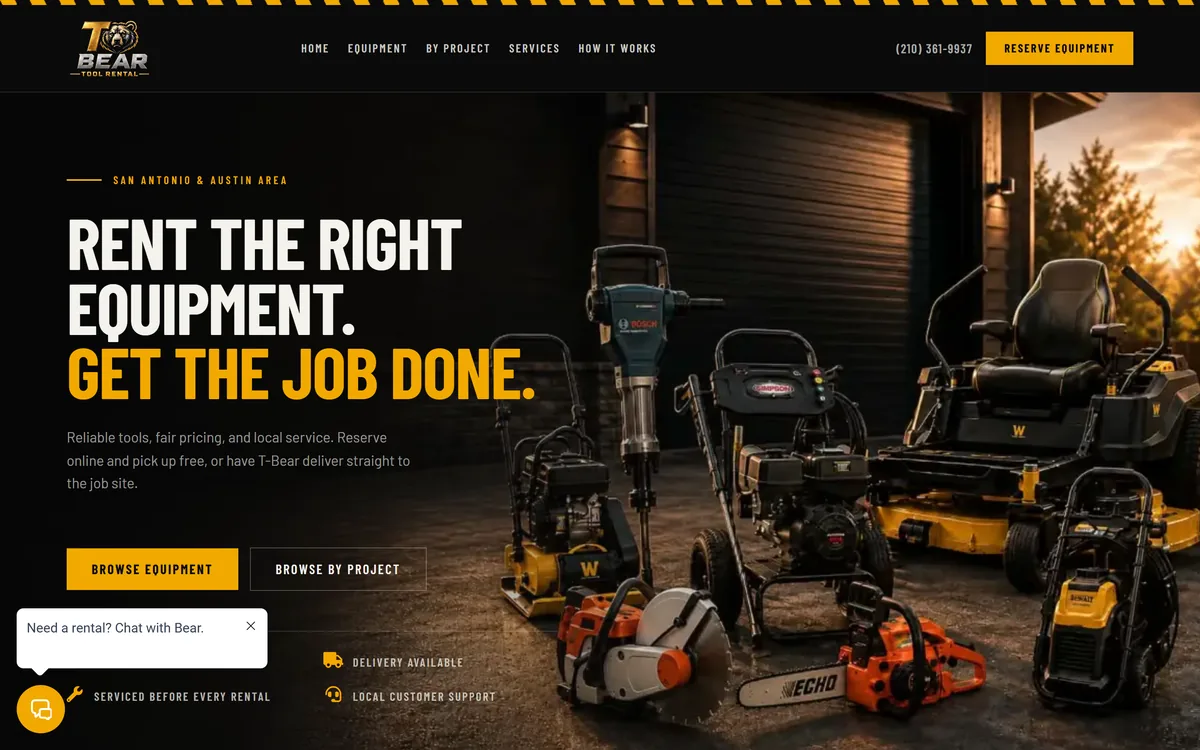
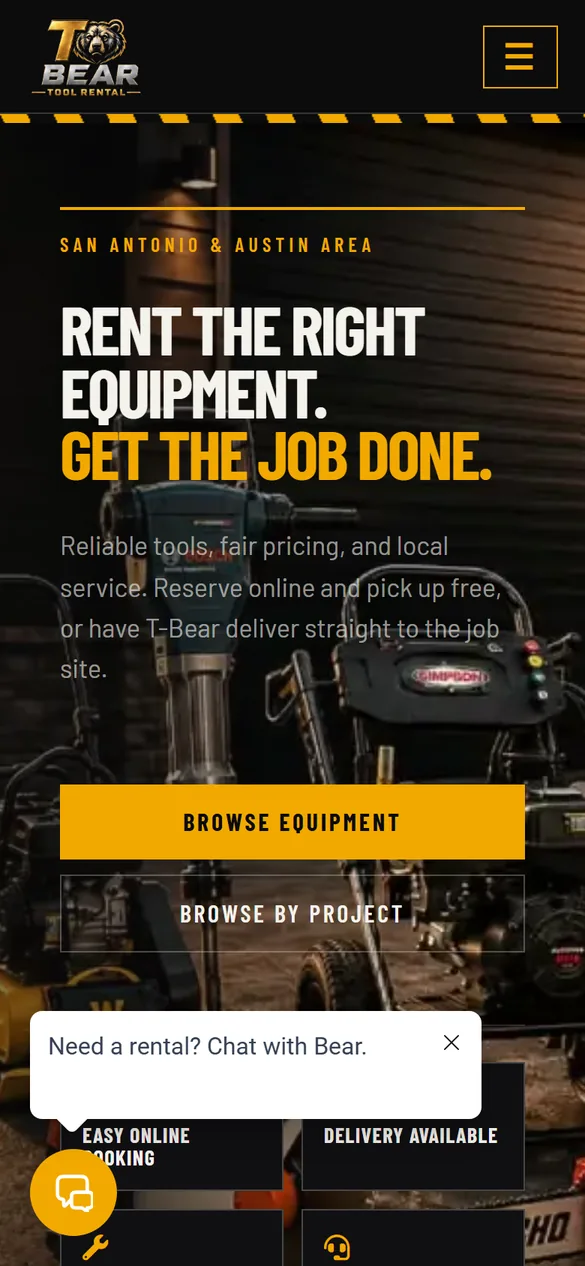
The site was rebuilt as a working rental storefront: fifteen machines, each with its own listing, photos, specifications, a published daily rate, and an online reservation request. Customers can browse the fleet, or start from the job they are actually doing, with seven starting points from cleaning a driveway to mowing an overgrown lot, each pointing at the right tool.
Behind the storefront, a reservation moves through confirmation, rental agreement, pickup, return and review, and the updates go out on their own. Agreement links are sent by text and email once dates and price are confirmed, signed online, and tracked on the site as pending or signed.
Two assistants named Bear handle the first layer of contact. Bear the voice receptionist answers the phone, covers the common rental questions, screens the robocalls, and transfers a real customer straight through instead of into a phone tree. Bear the website chat answers questions about equipment, starting rates, pickup versus delivery and hours, and points visitors at the right machine. Chat is kept out of the business text inbox, so a browsing question never buries a live rental.